
What makes a chess opponent a story character?
A portrait identifies an opponent. A role in the story tells you why you are meeting them.
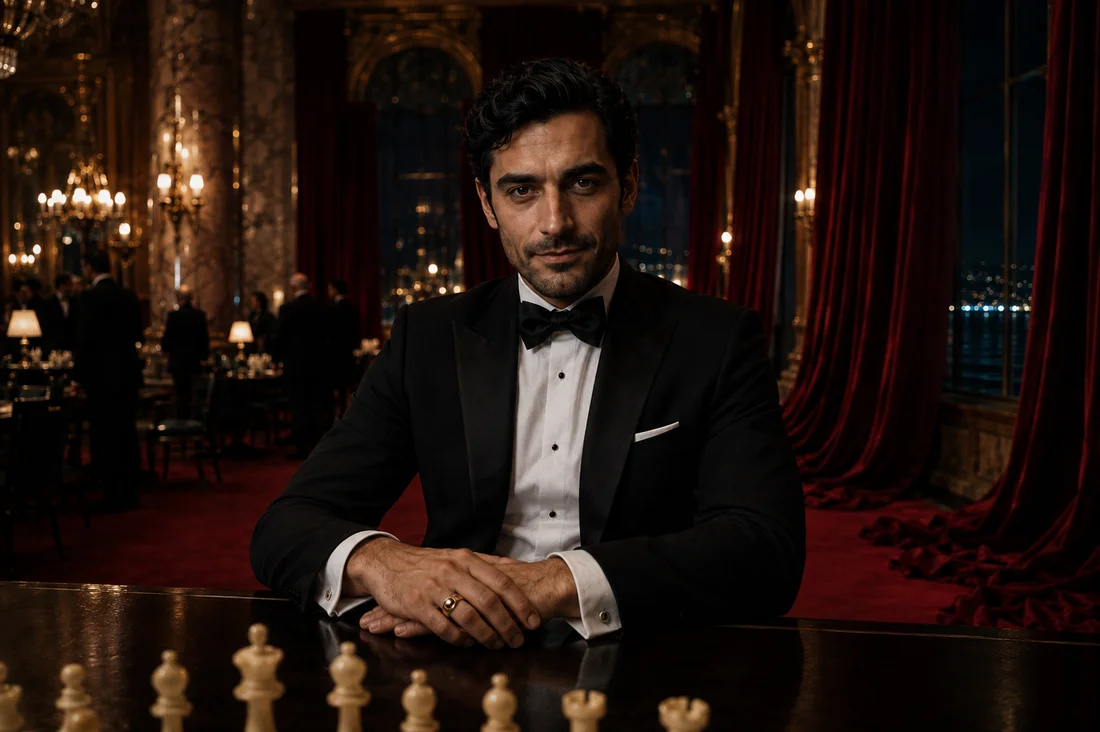
In a campaign, a useful character has something the player wants, a reason to sit at the board, and a connection to what happens next. The first two contacts in The Glass Syndicate show how those parts work together.
Start with the character's place in the world
Severin Vey belongs to the Syndicate's network. He is not the final destination of the mission; he is the contact who may introduce your cover identity to someone more closely connected.
Adrian Sorel has a different role. His private villa is a new social setting, and his recommendation can move you further into that circle.
Those roles make the sequence legible. One character opens access to another.
Give the meeting a reason
The Aurelia Invitational provides a plausible occasion for the first encounter. You have an invitation, a cover identity, and a place at the tournament.
You are not walking into a random room and demanding that someone play chess. You are participating in the world under an identity intended to belong there.
The fiction does some work before the board appears. It helps the player understand why the encounter is happening at all.
Give the player a specific objective
“Win the game” is a chess objective. “Earn the introduction that gets me into the next circle” is a narrative objective.
They can point toward the same result while producing different anticipation. You may care about converting an advantage because you want the result, and because you want to see the next location.
A clear objective makes that connection visible.
Let the settings distinguish the encounters
A tournament table and a private villa communicate different kinds of access. The setting changes the context of the meeting even though both involve a chessboard.
In the opening sequence, going from the Invitational to Sorel's villa makes your progress concrete. You have gone from being present at an event to being invited into a more private space.
The surrounding art and scenes should support that change rather than merely replace one background with another.
Keep fictional character and chess difficulty distinct
A powerful person in the story does not automatically correspond to a particular certified chess strength. Likewise, selecting a lower starting level does not change who the character is in the plot.
Play Story Chess's level settings tune the gameplay challenge. The narrative role explains the meeting. Those are separate pieces of information that the product should communicate honestly.
Read how level selection works.
What to notice as a player
When you meet a character, ask:
- What do they want or control?
- Why does my character belong in this meeting?
- What does playing them help me achieve?
- How does this encounter connect to the last one?
These are useful ways to judge whether the fictional context interests you. They are not claims about interviews with the creators or unpublished design research.